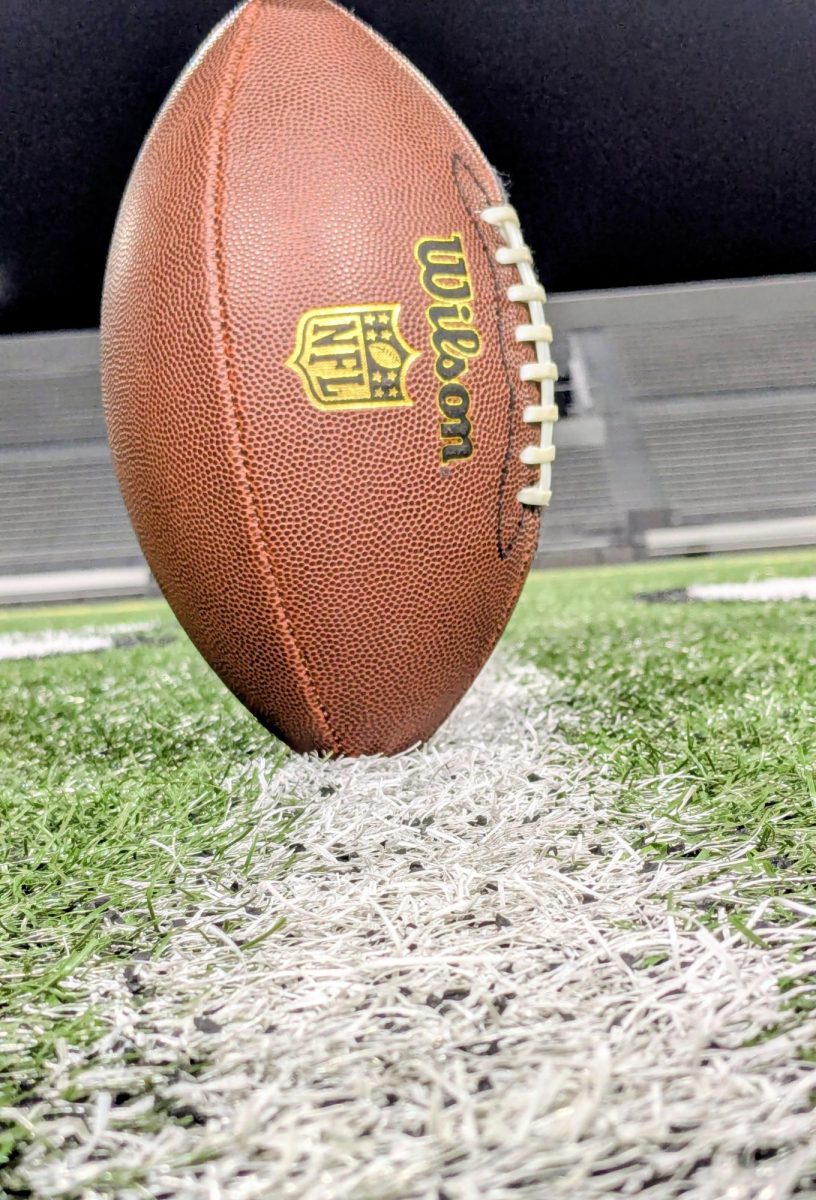

Most people know that many fields in both professional and college American Football, as well as many other sports (and activities), utilise artificial grass, officially known as turf. But have you ever wondered why? Who actually makes it? That there might actually be serious controversy regarding this plastic pastoral pretender of Gaia’s grass?
Multiple companies claim to be the largest producing company for artificial turf. FieldTurf claims to be “a world leader” in artificial grass, and “the leader in football.” In the course of further fact-checking, it seems that the company SGW (the Synthetic Grass Warehouse) also claims to be “the Largest Distributor of Artificial Grass in North America [sic].” But other lists of the top turf enterprises (which are strangely ubiquitous) varyingly mention the companies SynLawn, CCGrass, AstroTurf, XGrass, and even TenCate Grass. Thus, henceforth in this article the general group of large conglomerates will be referred to as “Big Grass.” FieldTurf, which seems to be the largest for Football and having the most brand-specific controversies, will be mentioned separately.
According to Howitismade.net, artificial turf is made via melting down a bunch of plastic pellets of various types, which are then strung out, stretched, and spun on loom-like spinners before being threaded into a plastic mesh and being settled by either sand or adhesive.
FieldTurf claims that its fields have “proven safety: Heavyweight infill systems deliver the lowest injuy [sic] incidence rate.” But it’s just this plastical process that makes up one of the largest points of public and private pique towards these faux-grass giants.
According to cleanwater.org, a nonprofit started in the bid to pass the Clean Water Act in 1972, “Artificial turf contains hundreds of harmful chemicals like lead, heavy metals, benzene, arsenic, Volatile Organic Compounds (VOCs), PFAS, and phthalates, some of which are cancer-causing (carcinogens), neurotoxins, and/or endocrine disruptors.” They say that “Even new ‘safer’ alternatives for the turf infill contain carcinogens and neurotoxins and that it almost always contains PFAs, chemicals linked to “decreased sperm count, as well as increased rates of infertility, risk of cancer, immune disorders, and more.”
Clean Water claims that Big Grass often covers up some information about how turf is made and what’s in it, because they aren’t legally required to reveal all chemical ingredients. The manufacturers often claim that their turf has been made PFA-free, but according to cleanwater, “this has not been supported by research.” One company suspiciously advertised that their turf had “No Intentionally Added PFAS. [sic]”
If you’re a football player, or a marching band member, or a cheerleader, or a participant in one of the many Washington activities at Kingston, you may be getting just a tad bit worried right now — Kingston Stadium does, after all, use artificial turf. But you can find a bit of comfort in the specific turf used there: According to Brockusa.com, the turf used at Kingston was manufactured by a company called Sprinturf (“American-manufactured turf[,]’’- 100% American”), which claims to be the “first fully integrated polyethylene turf company in North America.”
According to JCturf.com, that means the turf is “non-toxic, lead-free, and often has antimicrobial infill to keep pet zones clean and odor-free.” But if you’re still worried, Cleanwater from before has some tips to minimise danger: Avoid playing on synthetic turf on very hot days (this brings out the dangerous chemicals), Wash hands before eating, drinking, or adjusting mouth guards, avoid accidental ingestion, clean any cuts and abrasions with soap and water, and to take measures like brushing hair, shaking out equipment and clothes, showering after play, and ensuring that rubber or infill does not linger in your house.